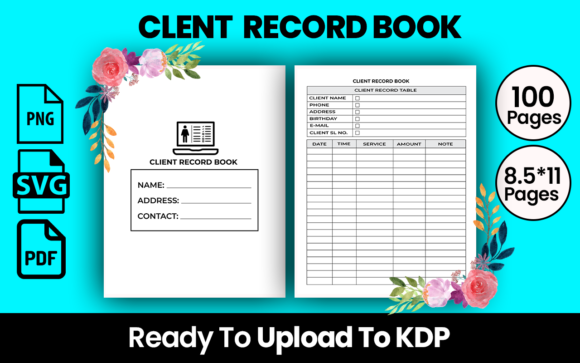
Client Record Book: Streamline Your KDP Publishing
Maintaining accurate records is the backbone of any service-based operation, yet finding a physical log that balances structure with flexibility can be surprisingly difficult. A Client Record Book serves as more than just a place to jot down names and dates; it acts as a centralized system for tracking interactions, services rendered, and essential contact details in a tangible format. For those utilizing Amazon’s Kindle Direct Publishing platform, having a pre-formatted interior removes the technical barriers associated with book creation. This specific resource offers a ready-to-print solution designed to help publishers launch professional-grade low-content books without spending hours on layout design or margin calculations.
Defining the Purpose Across Different Professions
The utility of a client log varies significantly depending on who is holding the pen. While the core function remains data organization, the context changes based on professional requirements and personal workflows. Understanding these distinctions helps determine if this specific 100-page interior aligns with your current objectives.
For Freelancers and Solo Entrepreneurs
Independent contractors often juggle multiple clients without the safety net of enterprise software. For this group, a physical record book provides a reliable backup to digital tools and a quick reference during meetings where laptops might be intrusive. The 8.5″ x 11″ trim size offers ample writing space for detailed notes on project scope, billing status, and follow-up tasks. Because this interior is formatted specifically for KDP with no bleed, freelancers looking to sell their own branded organizational tools can do so confidently, knowing the margins will not encroach upon the usable area. It transforms a simple administrative task into a potential revenue stream or a polished value-add for their own business operations.
Educators and Coaches
Tutors, music teachers, and life coaches require tracking systems that focus on progress rather than just transactions. Unlike corporate sales logs, these users need space to note developmental milestones, lesson topics, and behavioral observations. The structured nature of this Client Record Book allows educators to maintain consistency across sessions. Having three different file variants available means they can inspect the layout in PPT format to understand the editable structure, verify the final print appearance via PDF, or use PNG files for digital marketing mockups before committing to publication. This versatility supports both practical classroom management and the commercial aspect of publishing educational resources.
Evaluating Technical Specifications for KDP Success
Success in low-content publishing relies heavily on technical precision. A beautiful cover cannot save a book with misaligned text or cut-off margins. This interior addresses common pain points by adhering to strict formatting standards that benefit both new and experienced publishers.
- Trim Size Compliance: The 8.5″ x 11″ dimension is a standard letter size that appeals to North American markets. It is large enough for handwriting but compact enough for portability.
- No Bleed Configuration: Designing without bleed simplifies the upload process and reduces the risk of rejection. All content is safely contained within the safe zone, ensuring that critical lines and headers remain visible after trimming.
- Page Count Optimization: At exactly 100 pages, this book hits a sweet spot for spine width and perceived value. It is substantial enough to feel like a quality product but thin enough to keep printing costs low, allowing for competitive pricing strategies.
- Multi-Format Delivery: Receiving PPT, PDF, and PNG files provides comprehensive control. The PowerPoint file allows for minor customizations if you have specific branding needs, while the PDF ensures print-ready reliability. PNG assets are invaluable for creating A+ Content or social media previews.
Priorities: Balancing Speed, Quality, and Customization
Different creators prioritize different aspects of the publishing workflow. Recognizing where your priorities lie helps in assessing whether this pre-made interior is the right fit for your portfolio.
Speed and Efficiency for Beginners
Newcomers to self-publishing often face paralysis by analysis. Learning InDesign or Affinity Publisher takes time that could be spent on market research and keyword optimization. For beginners, the primary value here is immediacy. The ability to download a formatted PDF and upload it directly to KDP eliminates the learning curve associated with book typesetting. This allows new publishers to test niches rapidly. If a particular client record niche proves unprofitable, little time was lost in production. Conversely, if it sells, they have a validated asset ready to scale.
Presentation and Reliability for Established Publishers
Experienced KDP users already understand keywords and covers; their bottleneck is often inventory expansion. They evaluate interiors based on consistency and print quality. The inclusion of a PPT source file is particularly relevant here. Veteran publishers may want to adjust header fonts or add a logo to match an existing brand series. Having access to the editable source material transforms a generic template into a proprietary product. Furthermore, the assurance of correct no-bleed settings prevents the frustrating cycle of proof approvals and rejections, maintaining momentum in a high-volume publishing strategy.
Commercial Value for Marketers and Resellers
Some users approach KDP purely as a digital real estate investment. For marketers, the decision hinges on profit margins and conversion potential. The 100-page count at this trim size results in a specific printing cost that dictates royalty potential. By providing clear specifications upfront, this interior allows for accurate profit calculation before purchase. The included PNG files also serve a commercial purpose, enabling the creation of realistic 3D mockups for advertising campaigns without needing to order a physical proof copy first. This reduces overhead and accelerates the time-to-market for promotional efforts.
Determining Fit for Your Specific Goals
Not every resource suits every project. Before integrating this Client Record Book into your workflow or catalog, consider how its attributes map to your current needs.
Choose this interior if:
- You are targeting the US market where 8.5″ x 11″ is the preferred standard for office and organizational supplies.
- You require a no-bleed layout to minimize printing complexities and ensure text safety.
- You want the option to customize the interior later via PowerPoint but need a guaranteed print-ready PDF now.
- You are building a suite of business organization tools and need consistent page counts across titles.
- You are a service provider wanting to create a custom intake form for your own practice without hiring a designer.
Reconsider if:
- Your target audience prefers A4 or A5 sizes common in European or Asian markets.
- You require full-bleed graphics or colored backgrounds that extend to the edge of the page.
- You need a specialized layout with unique fields that differ significantly from standard client tracking columns.
- You are looking for a digital-only planner rather than a print-on-demand physical book.
Practical Application and Long-Term Usefulness
Beyond the initial upload, the long-term value of this interior lies in its adaptability. Small business owners might use the PPT file to create seasonal variations, updating cover designs or introductory pages while keeping the core recording pages identical. Hobbyists turning their passion into a side hustle can use the structured format to legitimize their operations, transitioning from scattered sticky notes to a professional ledger. Educators can repurpose the layout for student observation logs or parent communication trackers, demonstrating how a single "client" template can serve diverse educational functions.
Ultimately, the effectiveness of any KDP interior depends on how well it solves a problem for the end user while meeting the technical demands of the platform. This Client Record Book bridges the gap between functional design and publishing compliance. Whether you are launching your first title or expanding an established brand, the combination of precise formatting, multiple file types, and standard sizing provides a solid foundation for low-content success. By focusing on the practical needs of record-keeping and the technical realities of print-on-demand, it serves as a reliable tool for creators across the spectrum of experience and intent.