Coloring Book Sea World: Creative Assets for Professionals
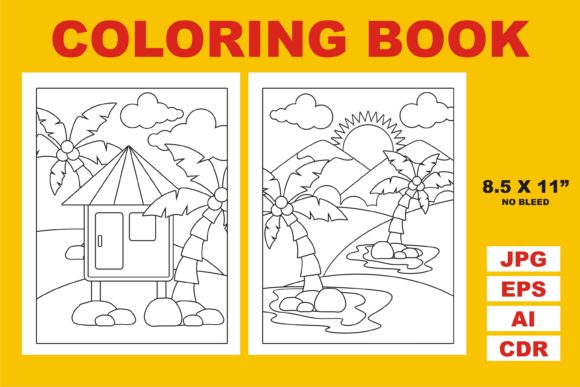
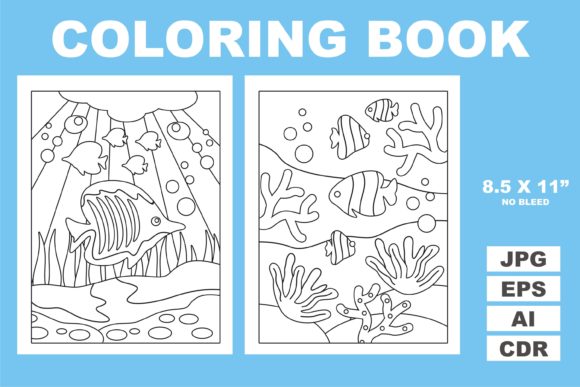
Diving into the depths of marine illustration offers more than just artistic enjoyment; it provides a versatile foundation for creative projects, educational materials, and commercial products. The Coloring Book Sea World collection serves as a comprehensive resource for designers, educators, and entrepreneurs who require high-quality aquatic imagery without the time investment of drawing from scratch. What distinguishes this specific asset pack is the inclusion of multiple file formats—JPG, EPS, AI, and CDR—which transforms simple coloring pages into adaptable design elements suitable for professional workflows across various industries.
Streamlining Production with Multi-Format Vector Assets
For graphic designers and publishers, format compatibility often dictates workflow efficiency. While raster images like JPGs are sufficient for web viewing or basic printing, they lack the scalability required for merchandise, large-format signage, or detailed editorial layouts. The availability of EPS and AI files within the Coloring Book Sea World package addresses this critical need. These vector-based formats allow creators to resize illustrations infinitely without pixelation, ensuring crisp lines whether the image is printed on a business card or a billboard.
Consider a freelance designer tasked with creating branding for an aquarium or a marine conservation nonprofit. Using standard raster clip art would result in jagged edges when scaled up for banners. With the AI and EPS source files, the designer can modify stroke weights, adjust colors to match brand guidelines, or isolate specific elements like coral reefs or sea turtles to create custom patterns. This flexibility reduces the need to hire a specialized illustrator for every minor variation, significantly lowering project costs while maintaining professional quality standards.
CorelDRAW Compatibility for Specialized Workflows
The inclusion of CDR files specifically caters to users in the sign-making, engraving, and textile printing industries where CorelDRAW remains an industry standard. Many professionals in these sectors rely on native CDR files for laser cutting, vinyl plotting, and screen printing preparation. Converting between vector formats can sometimes introduce node errors or path distortions that require tedious manual correction. By providing native CDR files alongside AI and EPS options, Coloring Book Sea World eliminates this friction point, allowing specialists to import designs directly into their production software and proceed immediately to manufacturing or output.
Educational Applications Beyond Simple Recreation
Educators and homeschool parents frequently seek engaging materials that bridge entertainment and learning. Marine biology is a captivating subject for students aged five through twelve, but finding accurate yet accessible illustrations can be challenging. Stock photos often present complex visual noise that distracts young learners, while generic cartoons may lack anatomical accuracy. This sea world collection strikes a balance by offering stylized but recognizable depictions of marine life that serve as effective teaching aids.
Teachers can utilize the editable vector files to customize content for specific lesson plans. For example, an educator focusing on ocean zones might separate deep-sea creatures from reef inhabitants to create distinct worksheet sets. The ability to add text labels, remove background elements, or combine multiple species into a single ecosystem diagram allows for the creation of bespoke educational resources that align precisely with curriculum standards. Furthermore, because the files are vectors, teachers can produce unlimited copies at any size without degrading print quality, making it cost-effective to create classroom displays, student workbooks, and interactive learning stations.
Supporting Therapeutic and Mindfulness Practices
Mental health professionals and wellness coaches increasingly recognize art therapy and mindfulness coloring as valid tools for stress reduction and cognitive focus. Adult coloring books have surged in popularity precisely because they offer a structured yet creative outlet for anxiety relief. The intricate details found in professional-grade sea world illustrations provide the optimal level of complexity needed to induce flow states without causing frustration.
Practitioners can use these assets to develop proprietary therapeutic materials. Rather than relying on mass-market books that may not suit specific client needs, therapists can curate personalized coloring packets featuring calming marine scenes tailored to individual preferences or therapeutic goals. The high-resolution JPG files are ready for immediate printing, while the vector sources allow for adjustments to line thickness or detail density to accommodate clients with varying motor skills or visual processing abilities.
Commercial Viability for Print-on-Demand Entrepreneurs
The print-on-demand (POD) market rewards sellers who can quickly iterate on niche designs. Marine themes consistently perform well in categories ranging from children’s apparel to home decor. However, success in POD requires unique compositions rather than recycled stock imagery. The multi-format nature of Coloring Book Sea World enables entrepreneurs to create derivative works efficiently. A seller might extract a whale illustration from the AI file, integrate it with typography in Illustrator, and export a print-ready PNG for t-shirt fulfillment, all while retaining the original EPS for future product variations.
This adaptability extends to digital product creation as well. Content creators can repurpose these illustrations for digital planners, social media templates, or printable activity packs sold on platforms like Etsy or Teachers Pay Teachers. Having access to layered or editable source files means creators can offer genuine value-adds rather than simply reselling unmodified assets. It is important to note, however, that users must always verify licensing terms before commercial use. While owning the files grants technical capability, legal usage rights depend entirely on the specific license agreement accompanying the purchase.
Evaluating Fit and Understanding Limitations
While Coloring Book Sea World offers significant utility, it is not universally appropriate for every project. Professionals seeking photorealistic scientific illustrations for academic journals or technical documentation should look elsewhere, as coloring book aesthetics inherently prioritize stylization over biological precision. Similarly, those requiring animated assets or 3D models will find static vector illustrations insufficient for their needs.
Users should also assess their technical proficiency before investing. While JPG files are universally accessible, maximizing the value of EPS, AI, and CDR formats requires familiarity with vector editing software. Beginners without access to Adobe Illustrator, CorelDRAW, or compatible alternatives like Affinity Designer or Inkscape will only utilize a fraction of the package’s potential. In such cases, free open-source tools can bridge the gap, but there is still a learning curve associated with manipulating vector paths and nodes.
Additionally, the stylistic consistency of themed collections can be both a strength and a limitation. If your project requires diverse artistic styles or eclectic visual references, a single-theme pack may feel restrictive. Conversely, for projects demanding cohesive visual language across multiple touchpoints, this uniformity becomes a major advantage. Buyers should compare this collection against broader libraries if variety is prioritized over thematic coherence.
Maximizing Return Through Strategic Implementation
The true value of Coloring Book Sea World emerges not from mere ownership but from strategic integration into existing workflows. Marketers developing summer campaign materials can leverage marine motifs to evoke seasonal associations without commissioning expensive custom artwork. Event planners organizing beach-themed fundraisers can create consistent signage, programs, and promotional items using the same visual vocabulary. Self-publishers producing children’s books can use these assets as foundational elements, adding color and narrative context to build complete stories.
Efficiency gains compound over time. Each hour saved searching for suitable imagery or correcting incompatible files represents productive capacity redirected toward higher-value tasks. For small business owners and freelancers operating with limited resources, this time savings translates directly to profitability. The key lies in viewing the collection not as a finished product but as raw material—a flexible component library that accelerates creative problem-solving across disciplines.
Ultimately, professionals should evaluate Coloring Book Sea World based on their specific operational needs rather than general appeal. Those working regularly with marine themes, educational content, or therapeutic arts will likely find the multi-format approach indispensable. Others with occasional or unrelated needs may prefer subscription-based stock services. Making this distinction ensures that investments in creative assets yield measurable returns aligned with actual business objectives and creative goals.