Address Book Letter: A Practical KDP Interior for Low-Content Publishing
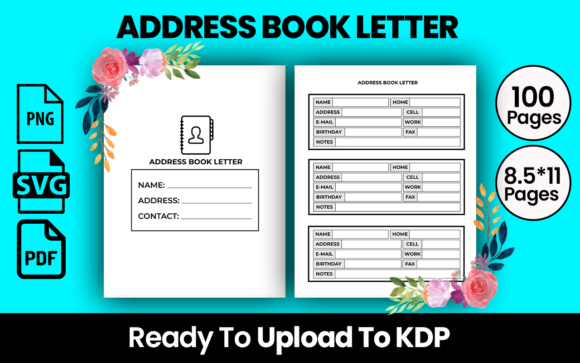
For creators navigating the Amazon KDP landscape, finding a reliable, high-quality interior is often the bottleneck between having an idea and publishing a product. The Address Book Letter template serves as a foundational asset specifically designed to bridge this gap. Unlike generic templates that require hours of reformatting or resizing, this interior arrives pre-formatted for immediate upload. It is a 100-page layout set to the standard 8.5″ x 11″ trim size with no bleed, making it exceptionally versatile for users who want to launch functional stationery products without technical friction.
The true value of this resource lies in its adaptability across different niches. While "address book" suggests a singular use case, the letter-sized format opens doors to organizational tools, business directories, and specialized contact logs that smaller 6x9 formats simply cannot accommodate. By providing three distinct file variants—PPT, PDF, and PNG—the template acknowledges that publishers have different workflows. Some prefer the stability of a ready-to-print PDF, while others need the editable nature of a PowerPoint file to customize headers, add branding, or adjust field labels to suit a specific audience.
Beyond Personal Contacts: Business and Professional Applications
When we think of address books, personal holiday card lists usually come to mind. However, the 8.5″ x 11″ dimension of the Address Book Letter interior makes it far more suitable for professional environments where data density matters. In a corporate setting, space is a premium. A standard pocket-sized address book forces users to abbreviate information, but this letter-sized layout allows for comprehensive record-keeping.
Consider real estate professionals who need to maintain client databases that include not just names and phone numbers, but also property addresses, spouse names, anniversary dates, and notes on preferred communication styles. The extra width of the letter format provides ample room for these detailed annotations. Similarly, insurance agents and financial advisors can utilize this interior as a physical CRM backup. In industries where digital fatigue is real and data privacy is paramount, having a tangible, offline directory offers both security and a tactile connection to client relationships that a spreadsheet cannot replicate.
Small business owners also find immense utility here. For vendors at craft fairs or farmers' markets, this interior can be repurposed as a wholesale buyer log or a supplier contact sheet. The spacious layout allows for recording order minimums, lead times, and account numbers alongside basic contact info. Because the template includes editable PPT files, a business owner can easily replace the generic "Address Book" title page with their company logo and specific field headers like "Vendor Name," "Account Rep," or "Restock Date," transforming a generic interior into a branded operational tool.
Specialized Niches and Community Organization
The flexibility of the Address Book Letter extends deeply into community and hobbyist sectors. Religious organizations, for example, frequently require member directories that go beyond simple contact details. They often need space for family groupings, ministry assignments, baptism dates, and emergency contacts. The 100-page count is ideal for mid-sized congregations, and the letter size ensures that multi-generational family entries fit legibly on a single spread without cramping.
Educational institutions and homeschool co-ops represent another significant demographic. Teachers managing classroom rosters, parent volunteers, or emergency pickup authorizations benefit from the structured yet spacious layout. For homeschool groups organizing field trips or collaborative classes, this interior serves as a central communication hub. The ability to download PNG files means that digital-first organizers can even use individual pages as printable worksheets or digital planner inserts, extending the product's utility beyond a bound physical book.
Caregivers and medical advocates also utilize similar layouts for managing care teams. When coordinating home health aides, doctors, specialists, and pharmacy contacts, clarity is critical. The large format allows for larger font sizes, making it accessible for older adults or those with visual impairments who still wish to maintain independence in managing their support networks. This accessibility angle is a powerful marketing point for publishers looking to serve the senior care niche with dignity and practicality.
Navigating File Formats and Technical Specifications
Understanding the included file types is essential for maximizing the potential of this KDP interior. The package includes PDF, PPT, and PNG formats, each serving a distinct purpose in the publishing workflow. The PDF is your production master. Formatted specifically for KDP’s 8.5″ x 11″ no-bleed requirements, it eliminates the guesswork regarding margins and safe zones. Uploading this file directly ensures that what you see on screen is exactly what prints, reducing the risk of rejection or formatting errors during the review process.
The PowerPoint (PPT) file is where customization happens. For publishers who want to differentiate their product in a saturated market, this file is invaluable. You can modify fonts to match a specific aesthetic, such as using elegant serifs for a wedding planner address section or bold sans-serifs for a contractor’s reference book. You can also add value-added content, such as introductory pages, area code maps, or conversion charts, which helps justify a higher price point and improves customer satisfaction. However, users should ensure they have compatible software to edit PPT files without disrupting the underlying grid alignment.
PNG files offer granular control for mixed-media projects. If you are creating a hybrid journal where only some pages are address logs, or if you are designing a digital product for platforms like Etsy alongside your KDP paperback, the PNGs allow you to extract individual pages without quality loss. This modularity supports a diversified product strategy, allowing creators to build bundles or upsells using the same core asset.
Strategic Considerations Before Publishing
While the Address Book Letter is ready for printing, success depends on strategic positioning. The "no bleed" specification is a crucial detail. It means all content stays within the safe margin, and there are no images extending to the paper's edge. This is generally safer for beginners and reduces printing costs, but it also dictates the design aesthetic. Publishers should embrace clean, minimalist designs that respect these margins rather than fighting against them. Attempting to force full-bleed graphics onto a no-bleed template will result in white borders that look unintentional.
Market research remains vital. Because this is a low-content interior, differentiation must come from the cover design, title optimization, and niche targeting. Simply listing "Address Book" will likely bury the product. Instead, successful publishers pair this interior with specific long-tail keywords. Think "Large Print Caregiver Contact Log," "Real Estate Client Directory 8.5x11," or "Church Member Registry with Family Groupings." The interior supports all these uses; the metadata must communicate them clearly to the right buyer.
Quality assurance is the final step before hitting publish. Even though the template is pre-formatted, always order a proof copy after making any edits in the PPT file. Font substitutions can sometimes shift text boxes or alter line spacing. Verifying the physical output ensures that the writing space is actually usable and that the binding gutter doesn’t consume valuable entry fields. This hands-on verification builds trust with customers and protects your publishing account from negative reviews related to usability issues.
Ultimately, the Address Book Letter represents a balance of convenience and professional utility. It removes the technical barriers to entry for KDP publishers while providing a robust canvas for solving real-world organizational problems. Whether serving a niche professional market, supporting community infrastructure, or aiding personal organization, the combination of letter-size dimensions, 100 pages, and multi-format accessibility makes it a pragmatic choice for builders in the low-content space. By focusing on specific user needs and leveraging the editable assets provided, creators can transform a standard template into a tailored solution that delivers genuine value to their audience.